Strategy
Machine Learning for Complex Decisions
Some business decisions become too complex for fixed rules, spreadsheets, or human intuition alone, especially when the number of variables is high and the cost of error is serious. This article explores where machine learning becomes genuinely useful, how it differs from basic automation, and why it matters most in high-stakes operational environments.
Apr 16, 2025
6 min.
Max Sheika
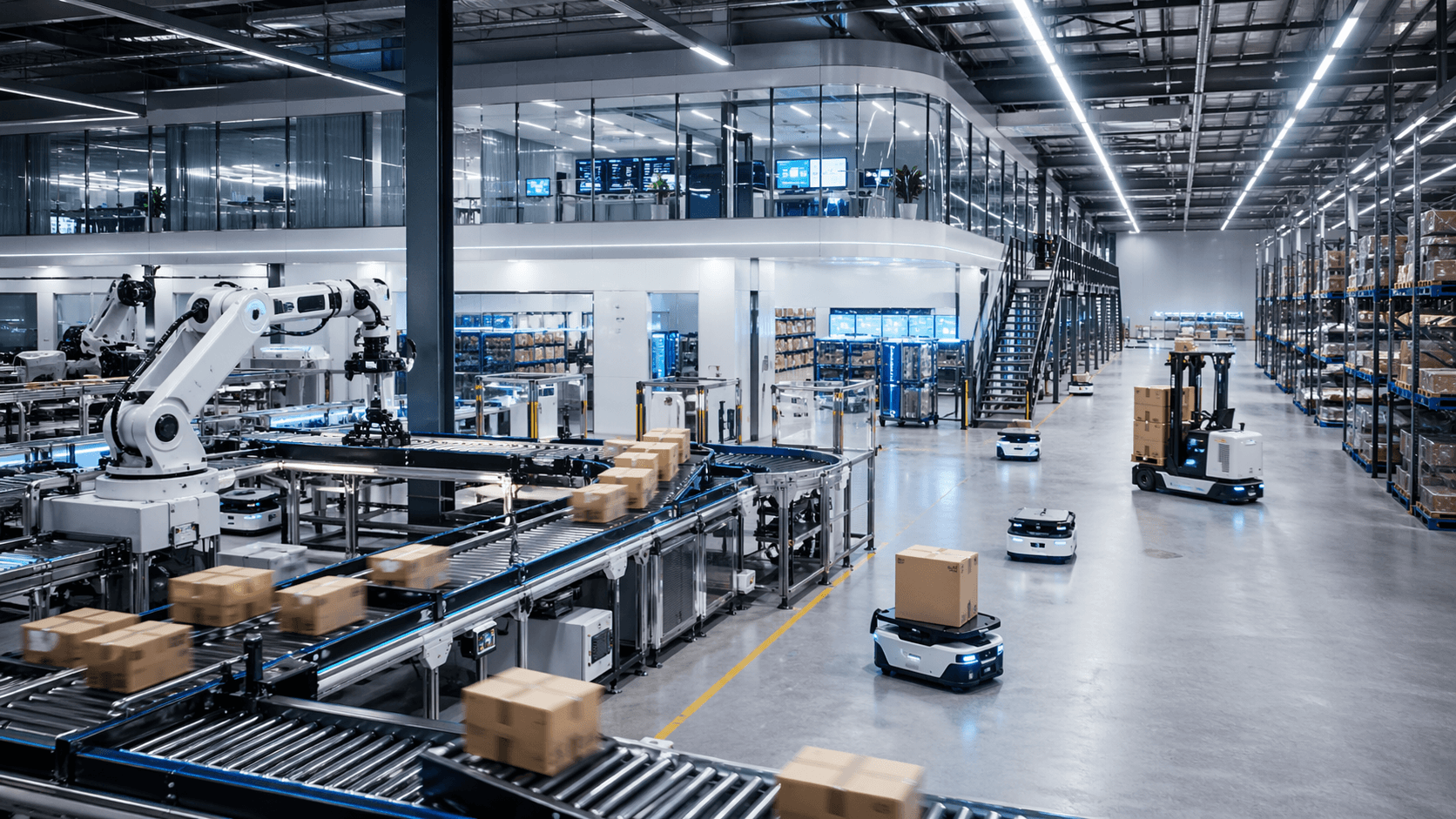
Some operational environments are simply too complex for fixed rules, spreadsheets, or human judgement alone. When performance depends on many interacting variables, conditions change constantly, and the cost of error is high, machine learning becomes less of an experiment and more of a practical tool for improving decisions.
Most businesses do not need machine learning everywhere
That is the right place to start. Many business problems can be solved with better workflows, clean automation, improved reporting, and stronger system design. Machine learning is not the answer to every bottleneck.
But there is a specific type of operational challenge where traditional logic starts to fail. These are environments where many variables influence the outcome at once, where timing matters, where conditions shift throughout the day, and where a small decision error can lead to meaningful losses in quality, efficiency, cost, or output.
That is where machine learning starts becoming useful.
What it means when rules stop working
Rule-based systems are helpful when the environment is stable and cause-and-effect is easy to define. If one value crosses a threshold, trigger an alert. If demand rises, reorder more stock. If a task is not completed, send a reminder.
That works until the system becomes too dynamic.
Imagine an operation where results depend on many overlapping inputs: environmental conditions, timing, material variability, energy costs, equipment behaviour, labour constraints, and changing external signals. One variable alone may not explain much. The challenge comes from how they interact.
At that point, the business is no longer dealing with a simple automation problem. It is dealing with optimisation under complexity.
Where machine learning becomes genuinely useful
Machine learning is most valuable when it helps a business make better decisions in variable-heavy environments where the patterns are difficult to see and the downside of getting them wrong is significant.
1. Predicting outcomes in systems with many inputs
Some operational decisions depend on outcomes that cannot be estimated well with simple averages or fixed rules. Performance may shift based on combinations of variables rather than any single condition on its own.
Machine learning can help by identifying patterns across a broader set of inputs and updating those patterns as more data becomes available. This is especially useful when outcomes are affected by timing, sequence, sensitivity, and changing conditions rather than one static rule.
2. Finding better operating windows
In complex operations, there is often no single “correct” setting. There are ranges, trade-offs, and moving target conditions. What improves one metric may reduce another. What works in one context may underperform in another.
This is where machine learning can support better decision-making. Instead of treating the system as fixed, it can help estimate which conditions are more likely to produce stronger results under the current circumstances. That allows teams to operate with more precision and less guesswork.
3. Responding earlier to weak signals
In many environments, problems do not begin with obvious failures. They begin with subtle drift: small shifts in performance, unusual combinations of readings, early indicators of inefficiency, quality decline, or risk.
Humans are not very good at detecting these weak signals consistently across large volumes of data. Machine learning can help surface them earlier, which becomes especially valuable when late intervention is expensive or the recovery window is narrow.
The highest-value use cases are usually not the most obvious ones
A lot of businesses first think about machine learning in terms of reporting or forecasting. Those are valid use cases, but the deeper value often appears in places where the operation is already struggling with complexity.
Examples include:
adjusting decisions based on changing environmental or production conditions
anticipating quality loss before it becomes visible
identifying combinations of variables that reduce yield, efficiency, or stability
improving the timing of interventions, maintenance, or process changes
balancing performance, resource use, and cost when these goals compete with each other
predicting when the system is moving outside its optimal operating range
In other words, machine learning becomes powerful when the business is not just trying to automate activity, but improve judgement inside the process.
The real difference between automation and machine learning
This distinction matters.
Automation is about making something happen automatically.
Machine learning is about helping the system make a better decision before that action happens.
A workflow can trigger a process when a threshold is reached. That is automation. A model that estimates whether the threshold actually matters in the current conditions, or whether a different action would produce a better result, is doing something more advanced.
This is why machine learning should not be treated as a replacement for good systems. It works best when layered on top of a clean operational foundation.
Why high-stakes operations need a different mindset
The more sensitive the system, the more important it becomes to avoid simplistic logic. In high-stakes environments, a bad decision does not just waste time. It can affect quality, output, margins, stability, planning, or resource use in ways that compound quickly.
That is why machine learning in these contexts should not be framed as “AI for innovation.” It should be framed as a way to improve operational precision where the system is too complex for manual optimisation alone.
Used well, it can help teams:
reduce avoidable variability
improve consistency across changing conditions
make faster adjustments with better evidence
protect output quality while managing cost pressure
respond to complexity without overloading the people running the operation
What businesses should ask before using machine learning
Before building anything, the better questions are usually operational, not technical:
Are we dealing with a genuinely variable-heavy system?
Is the current decision process too dependent on experience or manual judgement?
Do small errors create meaningful cost or performance losses?
Do we already have enough data to learn from patterns over time?
Would better prediction or optimisation materially improve outcomes?
Do we have the operational discipline to use the output well once it exists?
These questions matter more than whether the business is “ready for AI” in the abstract.
The opportunity is often hidden inside everyday complexity
Many businesses already know their operation is complex. They feel it in delays, inconsistent output, unstable quality, rising costs, or the fact that the best decisions still depend too heavily on a few experienced people.
That is often the clearest sign that rules are no longer enough.
Machine learning is not most useful where the process is simple. It is most useful where many variables interact, where outcomes are sensitive, and where improving the decision by even a small margin has a real commercial effect.
The point is not to remove people from the process. It is to give them better support in environments where manual optimisation has reached its limit.